Stourton Castle
The King's CurseStourton Castle is the Staffordshire home where Margaret Pole raises her children, manages the family’s affairs, and faces the loss of both her husband and her household. First presented as a ramshackle house with a great door, a nursery, and working stables, it is more than a backdrop: the castle holds together Margaret’s domestic responsibilities and the family’s hopes, then exposes how little control she has over their land and future when royal wardship and poverty intervene.
Home and Household
In the spring of 1500, Margaret enters a monthlong confinement at Stourton while her husband, Richard Pole, leaves to escort Prince Arthur to Ludlow. At the castle’s great door, she waves them goodbye. Prince Arthur kneels for her blessing; she lays a hand on his head and kisses both his cheeks before he mounts his horse. Her farewell joins the household’s ordinary care to the danger of royal service: she warns him to take care when jousting and riding, having promised his mother that he will come to no harm. The scene makes Stourton a place from which Margaret watches over the next generation even as it departs.
By autumn 1504, Margaret is living at Stourton while Richard governs Wales from Ludlow. She is pregnant again, and he visits, pleased with the way she tends their lands and home and oversees the children’s education. Their shared attention to rent books in the steward’s room shows the household as an economic operation as well as a family residence. Richard cautions that their resources must support four children and another expected child, including a suitable dowry for Ursula. Margaret, in turn, points to his service to the king and the fines he sends into the royal treasury, arguing that his work should earn him more land.
Illness, Death, and the Household’s Vulnerability
In the winter of 1501, Margaret returns to find all three older children ill at Stourton. In the nursery, nine-year-old Henry lies in a four-poster bed with his brother Arthur curled beside him; Ursula tosses in a nearby truckle bed. The baby, Reginald, is the only child not sweating or showing a red rash. Henry’s rash has spread across his chest and belly, swollen his face, and marked the skin behind his ears and on his neck. The details make the castle’s domestic rooms the site of intimate, fearful observation: Margaret looks over the children while illness threatens the family within its own home.
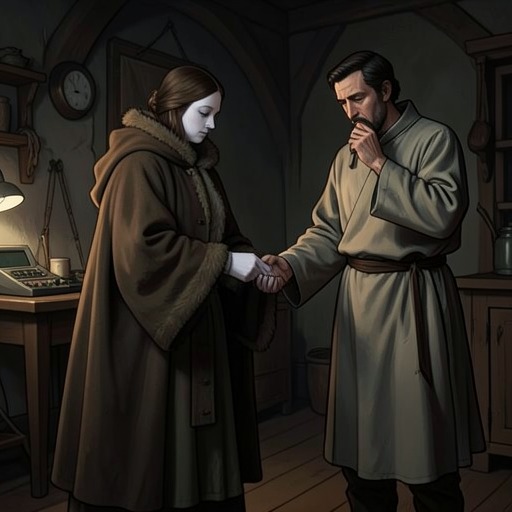
Richard’s death brings another confinement, this time leaving Margaret unable to receive comfort face to face. A priest speaks consolation through the door, and a physician reports that a fever has overcome Richard’s strength. Margaret rejects the physician’s extended list of illnesses that it was not and turns instead to the steward and the work of arranging a burial. She orders Richard laid in his coffin on the chancel steps of the church at Stourton, with a proper watch, a tolled bell, money for the tenants, and black cloth for mourners. Even in grief, she has to direct the household’s formal obligations and insist on dignity while keeping the arrangements as inexpensive as possible.
Estate, Widowhood, and Departure
After Richard’s death, the estate that sustained the household becomes subject to royal control because their sons are still children and become royal wards. Its earnings are to pass into the royal treasury until an heir is old enough to inherit, while the king can determine what happens to the estate’s trees and livestock. Margaret’s own entitlement is a widow’s third share of rents and profits. Permission to borrow 120 nobles from her son’s estate may see the family through Christmastide, but it is a loan from property she once regarded as her own, not an adequate solution to the household’s needs.
Margaret describes how little her dower can support: Stourton provides only a small amount of land, while the estates at Medmenham and Ellesborough yield fifty pounds a year in rents, of which she receives just a third. The shortage becomes physical and practical. She fears hunger, dismisses servants when she cannot pay them, and cannot offer departing staff quit money. Those who remain take on unfamiliar work. Margaret assumes responsibility for the dairy, learning to make cheese and skim milk, and learns to brew ale after sending the dairymaid away. Her son Henry rides with the steward to watch the sowing, anxiously judging whether the measured seed will cover the fields. The castle’s household survives by converting service and specialized labor into work Margaret and her children must undertake themselves.
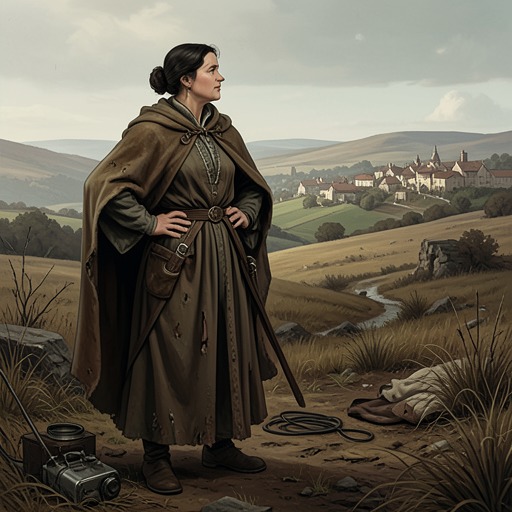
That effort cannot keep the family at Stourton. Margaret releases the servants and grooms after paying their wages only up to the day they leave, then tells the children they must move and tries to present the journey as an adventure. She shuts the castle, leaving John Little as bailiff to collect rents and fees: two thirds go to the king and one third to her. As the family rides away, Reginald travels on his father’s old hunter, while Ursula and Geoffrey accompany Margaret. She cannot bring herself to tell Reginald that they will have to part, with him sent to one religious house and the others to another. Stourton’s closure is therefore also the breaking apart of the household it had contained.
Narrative Significance
The castle’s changing role gives concrete form to Margaret’s changing circumstances. At first, its door frames a protective farewell to Prince Arthur; its nursery shelters children whom she watches through illness; its steward’s room holds the books through which she and Richard plan for their family. After his death, however, the same home becomes an estate whose income and resources are governed by the king, while Margaret’s widow’s share proves too small to sustain it. The transition from managing the household to learning its manual work, and finally to shutting the castle, traces the loss of practical authority behind her continuing family identity.
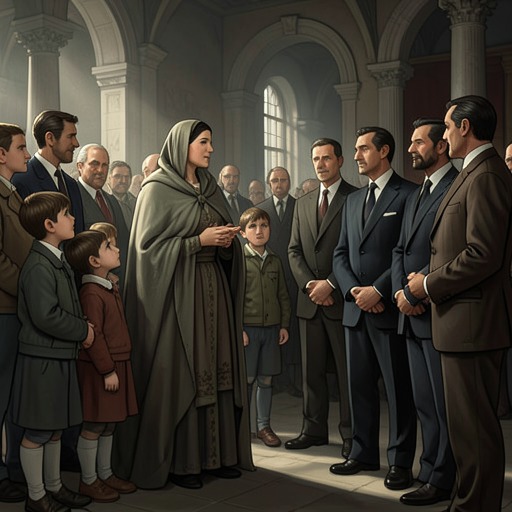
The later account of Margaret’s standing at court sharpens that contrast. Henry VIII had restored her family lands, granted her a title, and shown her favor, leaving her wealthy and uniquely able among women to hold title and land in her own right. Against that later position, Stourton’s closure records an earlier vulnerability in which possession did not guarantee control: her sons’ minority placed the estate’s income in royal hands, and the available dower could not keep the home and its people together. The castle matters, then, not as an abstract emblem of permanence, but as a lived place whose rooms, books, labor, and eventual silence register the limits imposed on Margaret’s power.